
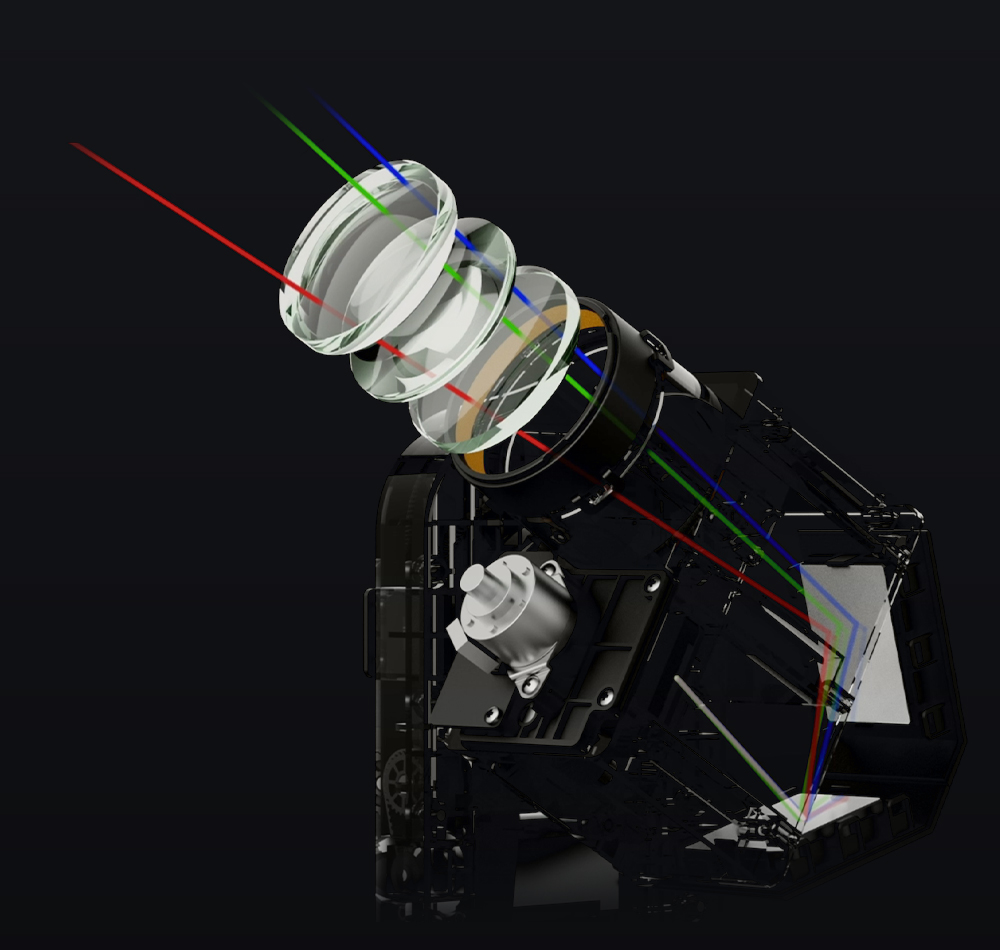
We are pleased to report that the Cosmoscope has recently acquired an instrument from Starizona in Tucson, AZ. Both the optics and display software are manufactured by ZWO Co., Ltd, out of the town of Suzhou in Jiangsu province in China, making for an affordable first system for the Cosmoscope.
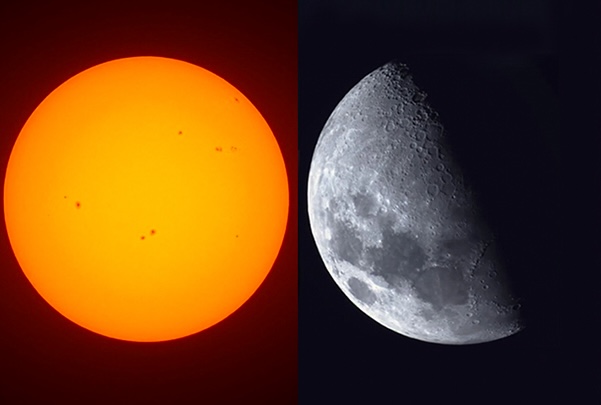
The optics of the new system are said to be the equivalent magnification of a 1200 mm telescope on a full-frame 35mm camera sensor. That is, the field of view is very nearly one degree wide – roughly pinkie finger width at arm’s length. This makes the instrument suitable for not only many common deep space objects, but also for lunar and even solar imaging.
This small instrument will debut in the Cosmoscope’s remote outreach missions and is likely to remain mobile on its carbon fiber tripod rather than permanently mounted on a pier in a dome. After becoming familiar with the instrument, Cosmoscope staff hope to become proficient in Open Broadcaster Software, a suite for switching video and images to be “broadcast” live on YouTube.

It will be obvious to some readers that the online presentation may be considered similar to Slooh, or other subscription-based telescope access websites. Cosmoscope services are intended to remain free, and broadcasts will be presented live via YouTube, with staff taking requests on object selection via live chat and providing context where possible. It should be emphasized that staff are interested amateurs, only, and hope to learn from audience members as well!

Images will be “stacked” in real-time for live YouTube guests, with every frame increasing the contrast and resolution of the image as time goes on. At any given time of year the sky targets that are bright-enough for such real time viewing are limited, and so further processing will be accomplished in the open source Siril image processing suite and possibly in commercial software as such demonstrations become appropriate.
We look forward to presenting images from first light in this space very soon. Thank you for your interest!
Images from ZWO website. No infringement intended. We’ll replace with our own original images, soon!
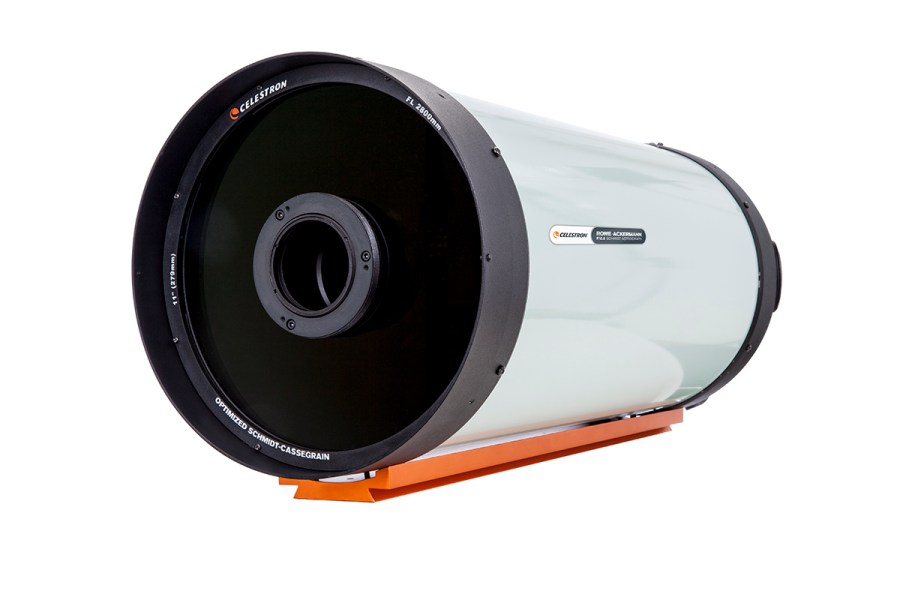
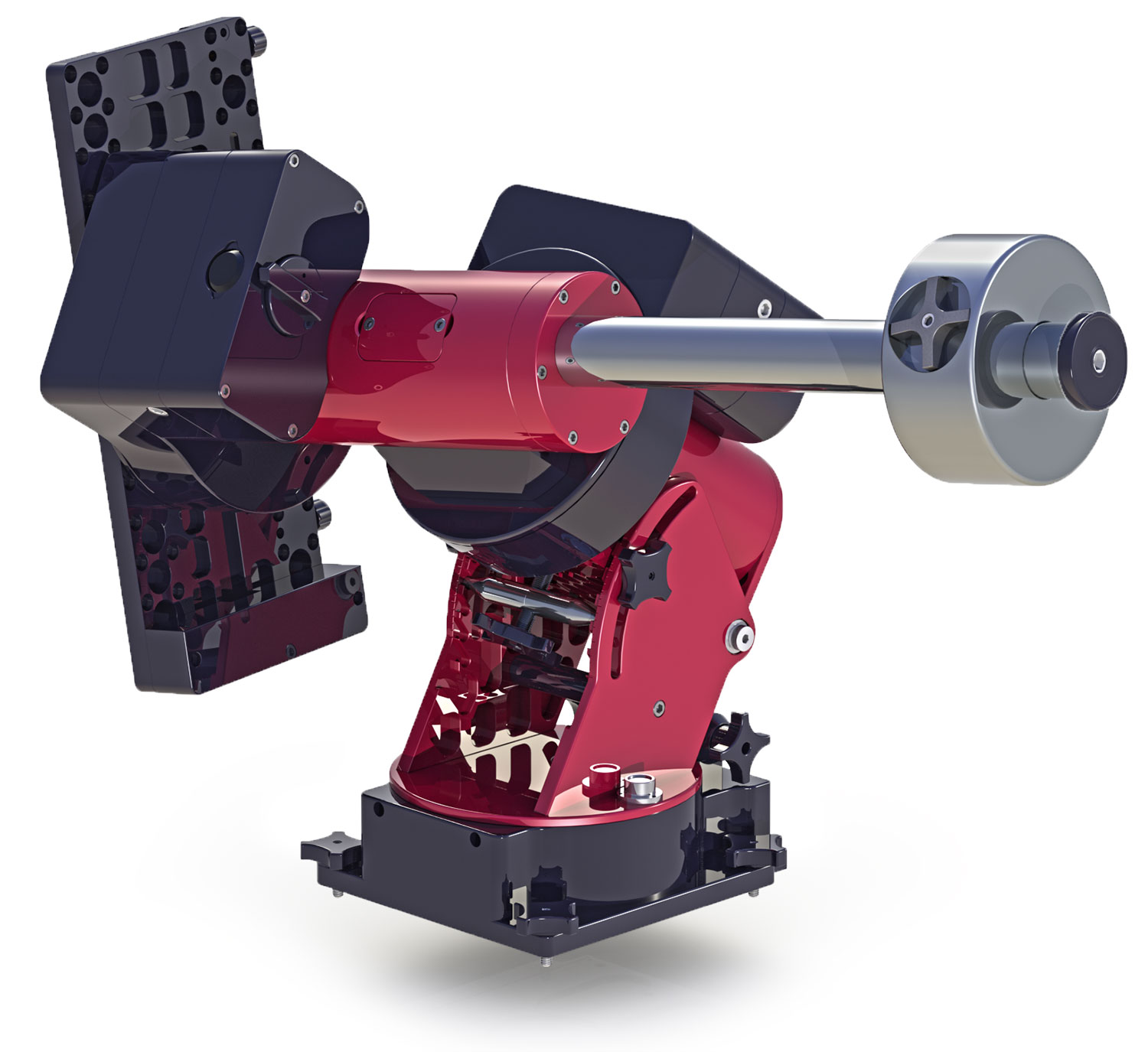 Celestron’s 11-inch telescopes are put to good use by remote telescope operator Slooh. Colorado-based manufacturer Bisque makes equatorial mounts for less than $10,000 that achieve pointing accuracies near those of truly professional equipment. Digital camera manufacturer Diffraction Limited offers units with various combinations of resolution and sensitivity.
 of this hardware, but also the expertise and ingenuity of a large user base. Much of this equipment comes with computer control software already anticipating remote use via internet protocol.
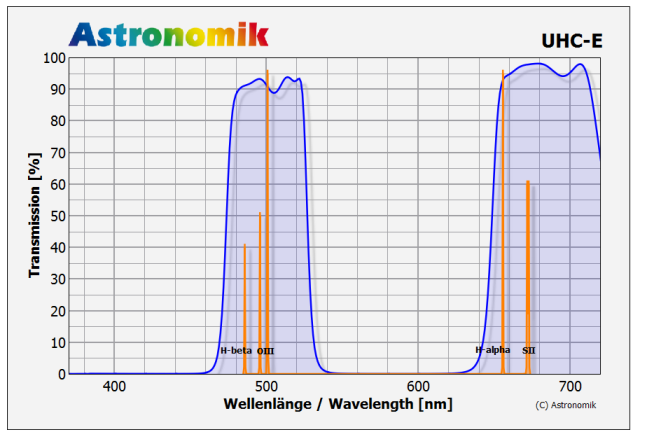 evalent of these atoms emitting in the visual spectrum are hydrogen and oxygen.
 It turns out that by lucky coincidence, the color of doubly-ionized oxygen falls between the blue LED emission and the phosphor re-emission! Note the two charts here produced for different purposes. The yellow lines in Astronomik’s chart are the “colors” of interest. The bottom chart is the color curve for white LEDs. Note that the LED curve dips right at 500nm – the frequency…, the color… of interest! This is a teal, right between green and blue. The other color of greatest use – a red – is the stronger of two hydrogen colors, at 656 nm where the phosphor color curve quickly decreases in intensity.
 Cosmoscope